
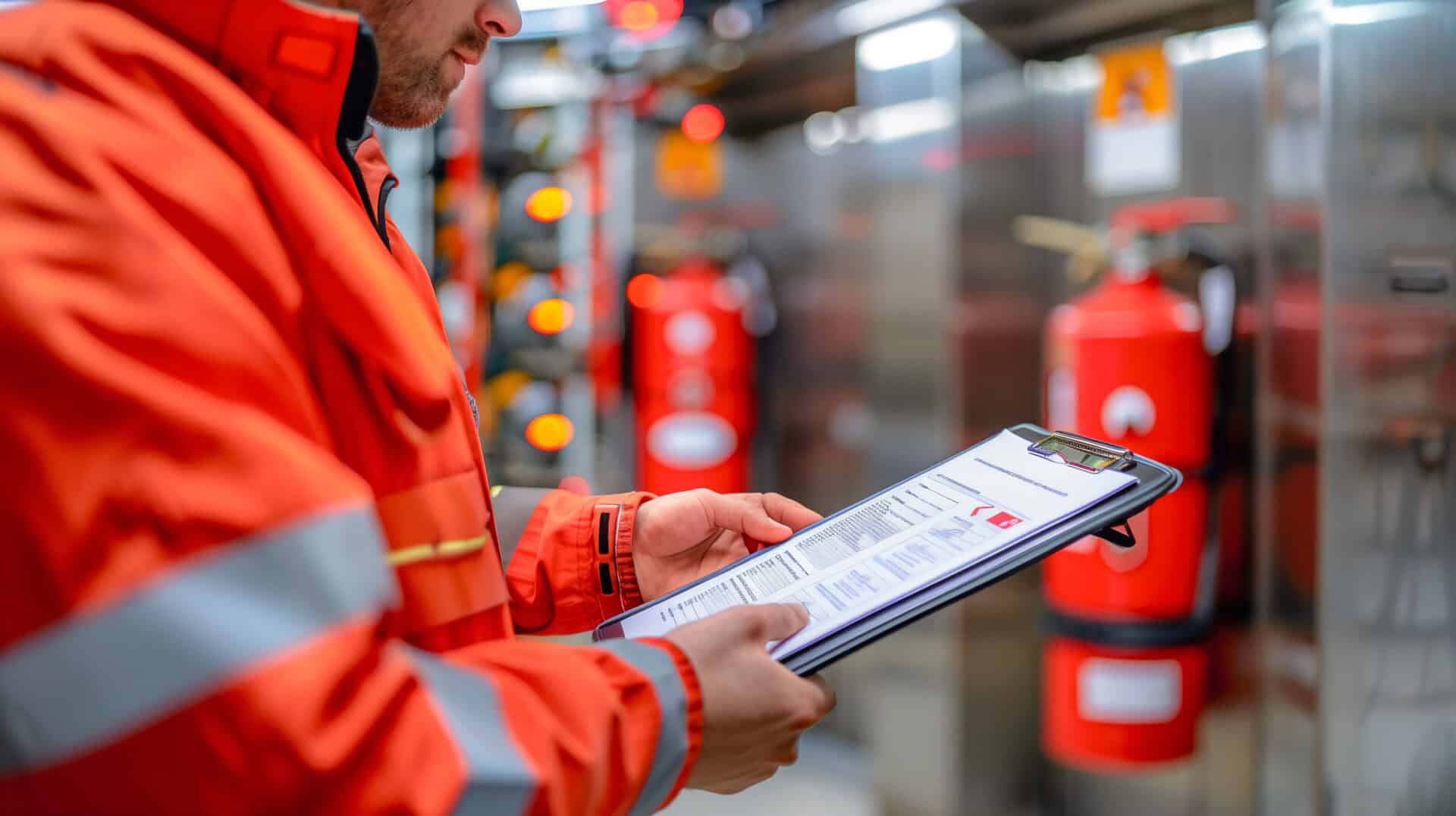
At A1 Fire Protection, we often speak to businesses that assume their fire extinguisher provision is fine simply because extinguishers are already on the wall. In reality, fire extinguisher cover should be reviewed as a business evolves. Premises change, equipment changes, staff numbers change and the way space is used often changes too. Over time, that can mean your original extinguisher setup no longer reflects the hazards that are actually present. Fire safety law for business and non-domestic premises requires a responsible person to carry out a fire risk assessment and keep it up to date.
Your premises layout has changed
One of the clearest reasons to review extinguisher provision is a layout change. Perhaps a storeroom has become a charging area, an office has been turned into a workshop space, or a new partition has changed how people move through the building. Even relatively small changes can alter access routes, visibility and the suitability of extinguisher locations.
Extinguishers are not only about type. Positioning matters too. Equipment should be visible, easy to access and appropriate for the hazard nearby. If layout changes have left extinguishers hidden, harder to reach or no longer close to the risks they are meant to cover, the setup needs reassessing. HSE guidance makes clear that fire risk assessments should consider both hazards and the people at risk, and should be reviewed regularly.
You have introduced new equipment or processes
Businesses rarely stand still. New machinery, appliances, charging points, cleaning equipment or cooking processes can all introduce different fire risks. A premises that once needed a fairly simple extinguisher plan may become more complex over time.
For example, the introduction of a kitchen or catering area may mean wet chemical extinguishers are now needed. Increased use of electrical equipment may change where CO2 extinguishers are most appropriate. A workshop taking on flammable liquids or heated processes may also need a different combination of protection.
A1’s fire fighting equipment service is built around supplying and servicing a range of fire safety equipment rather than treating extinguishers as a one-size-fits-all product. The company’s service page also highlights that most workplaces require different extinguisher types to cover different hazards.
You are storing or charging more lithium-ion batteries
This is one of the most common modern triggers for a review. Many businesses now use rechargeable batteries in tools, scanners, radios, laptops, phones, e-bikes, e-scooters and maintenance equipment. Government guidance for premises managers was published specifically to help address the fire risks linked to e-cycle and e-scooter batteries, after rising concern from fire and rescue services.
If your site now has a charging station, more battery-powered tools, or dedicated battery storage areas, it is worth revisiting your fire risk assessment and extinguisher provision. In some cases, that may include reviewing whether LFX fire extinguishers are a sensible addition alongside standard equipment. A1’s LFX page explains that these extinguishers are intended for lithium-ion battery fires and supplied, installed and maintained by its engineers.
Your fire risk assessment has not been updated in a while
Many businesses carry out a fire risk assessment, file it away, and assume the work is done. That creates a problem when day-to-day operations change but the assessment does not. The government’s business fire safety guidance makes clear that fire risk assessments must be kept up to date and reviewed when circumstances change.
An outdated assessment often means outdated extinguisher provision. If the risks identified years ago are no longer the main risks on site, the extinguisher plan may not be serving the business properly. This is especially true where battery charging, electrical equipment, new storage arrangements or mixed-use workspaces have become more common over time.
Staff are unsure what extinguishers are for
Uncertainty among staff is a warning sign in itself. If people do not know which extinguishers are for which risks, or if they have never been shown the basics of extinguisher use and emergency response, the business may need both a review of equipment and a review of training.
Fire extinguishers should support a clear and practical fire safety strategy. If staff feel confused by the mix of equipment on site, or if the only knowledge they have comes from labels on the wall, that should prompt action. A1’s fire safety training service focuses on helping teams understand fire responsibilities and respond appropriately in emergencies.
Extinguishers are being serviced, but nobody is reviewing suitability
Regular servicing is essential, but servicing alone does not guarantee the setup is still right for the premises. It is possible for extinguishers to be technically maintained and still not be ideally matched to the current risks.
BAFE states that BS 5306-3 sets the recognised servicing intervals for portable extinguishers. Annual servicing matters because it helps ensure extinguishers remain operational. But businesses should also use review points to ask whether the overall mix, location and purpose of extinguishers still make sense.
You have added a new tenant, department or type of use
Shared buildings and changing occupancies can alter fire risk significantly. A unit that once operated as office space may now be used for storage, repairs, fulfilment or light production. A landlord or facilities manager may also be dealing with multiple occupiers whose risks differ from one another.
Where there are new tenants, changing uses or expanded areas of operation, extinguisher provision should be reconsidered. This is particularly important where communal corridors, shared back-of-house spaces or charging areas are involved. The responsible person needs to know not just that equipment exists, but that it is appropriate to current use and supports a safe emergency response.
You are relying on a very old setup
Some businesses inherit their extinguisher provision from previous occupiers or long-standing arrangements. Over time, the reasons behind certain extinguisher placements may become unclear. Labels can remain, but the operational logic behind them may no longer exist.
This is where a fresh, practical review can be valuable. Rather than assuming the existing arrangement is correct, it is worth asking whether it still reflects the building as it functions today. That includes checking for changes in stock levels, equipment, electrical load, battery use, room purpose and evacuation flow.
A practical review creates better protection
Reviewing extinguisher provision does not mean replacing everything. In many cases, the core setup may still be suitable, with only a few adjustments needed. A practical review is about making sure the right extinguisher types are in the right places for the right reasons.
For some businesses, that might mean no major change at all. For others, it could mean repositioning equipment, updating signage, improving staff awareness or introducing specialist options where new hazards are present. Where lithium-ion batteries have become part of daily operations, that may include considering fire extinguishers for lithium-ion battery risks.
If your business has changed, your fire extinguisher provision may need to change too. Layout updates, new equipment, added battery charging, outdated fire risk assessments and uncertain staff awareness are all strong signs that it is time for a closer look.
At A1 Fire Protection, we help businesses review their protection measures in a practical way. Whether you need support with fire fighting equipment, wider fire protection services or fire safety training, the aim is to make sure your premises are protected by equipment that actually matches the risks on site. A1’s website states that it provides equipment, training and fire protection services tailored to business needs, with experience dating back to 1995.