
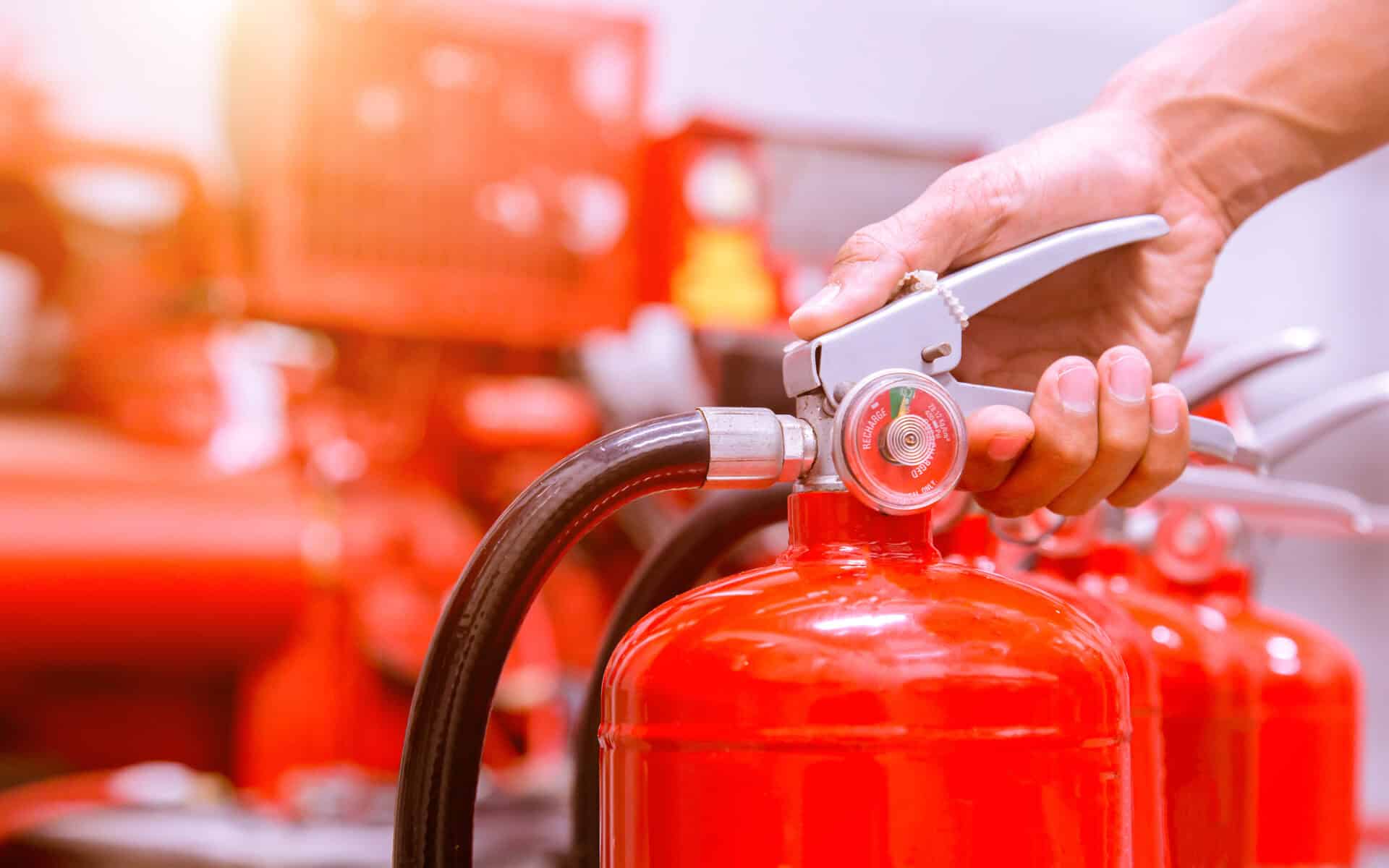
Choosing the right fire extinguishers for your business is an important part of building a safer workplace. While extinguishers are a familiar sight in most commercial premises, selecting the correct type is not just a box-ticking exercise. Different businesses face different fire risks, and the extinguishers you provide should reflect the hazards that are actually present on site.
For many organisations, that means going beyond a basic assumption that one extinguisher type will suit every area of the building. Offices, warehouses, workshops, kitchens, retail spaces, communal areas and plant rooms can all present different risks, and the wrong extinguisher in the wrong location can create confusion in an emergency rather than support a fast and effective response.
A sensible extinguisher strategy should take into account the layout of the premises, the materials and equipment in use, how people move through the space, and what kinds of fires are most likely to occur. It should also sit alongside wider fire safety measures such as alarm systems, staff awareness, routine servicing and a suitable fire risk assessment.
At A1 Fire Protection, we understand that choosing the right fire extinguishers for your business is an important part of creating a safer working environment. While extinguishers are a standard feature in most commercial premises, selecting the correct type is not simply a matter of meeting basic requirements. Different businesses face different fire risks, and the extinguishers you provide should reflect the hazards that are actually present on site.
Why choosing the right extinguisher matters
Portable fire extinguishers are designed to help control small fires at an early stage, but they are only effective when they are appropriate for the type of fire involved. Using the wrong extinguisher can reduce effectiveness, increase risk to the user, and in some situations make the incident worse.
That is why businesses should never treat extinguisher provision as a generic purchase. A properly considered setup helps protect people, supports compliance, and gives staff a better chance of responding appropriately if a fire starts in its earliest stage. It also helps avoid overcomplicating the environment with unnecessary equipment that is poorly understood or incorrectly positioned.
In practice, the right arrangement is usually a balance. Businesses need suitable coverage for their real risks without creating an environment where extinguisher choice becomes unclear. This is why professional advice, installation and servicing remain so important.
Understanding the main types of fire extinguishers
The starting point for any business is understanding the role of the main extinguisher categories commonly used in commercial environments.
Water extinguishers
Water extinguishers are generally used for Class A fires involving solid combustible materials such as wood, paper, cardboard and textiles. They are often suitable in office environments, schools, shops and other premises where ordinary combustibles are one of the main concerns.
They are not suitable for flammable liquid fires or cooking oil fires, and they should not be used where live electrical risks are involved unless the unit is specifically rated for that use. For many straightforward commercial spaces, water extinguishers remain an important part of the overall setup.
Foam extinguishers
Foam extinguishers are commonly used where there is a risk of Class A fires as well as flammable liquid fires. This makes them a practical option in a range of business settings, including some workshops, storage areas and mixed-use commercial premises.
Because they can cover more than one type of fire risk, foam extinguishers are often seen as a flexible option. Even so, they are not a universal answer. Their suitability depends on the environment, the substances present, and the way the premises are used day to day.
CO2 extinguishers
CO2 extinguishers are typically used where electrical equipment is a key concern. They are commonly positioned near server rooms, electrical cupboards, offices with significant electronic equipment, and similar environments.
Because CO2 leaves no residue, it can be useful around sensitive equipment. However, it is not designed to replace other extinguisher types in areas where ordinary combustibles are the main fire risk. In many businesses, CO2 extinguishers work best as part of a broader extinguisher plan rather than as a standalone solution.
Dry powder extinguishers
Dry powder extinguishers can be highly versatile and may be suitable for a range of fire classes depending on the product. They are sometimes used in industrial settings, outdoor areas or environments where mixed risks exist.
That said, powder is not always the preferred choice for enclosed indoor commercial spaces. The discharge can reduce visibility, spread residue widely, and create clean-up issues, so the practical implications need to be considered carefully. In some business environments, other extinguisher types may offer a more suitable and user-friendly solution.
Wet chemical extinguishers
Wet chemical extinguishers are designed primarily for cooking oil and fat fires, making them especially relevant in commercial kitchens, catering operations and food preparation areas.
Where deep fat fryers or similar cooking processes are present, this type of extinguisher is often essential. A standard office or retail extinguisher setup would not usually be enough for these higher-risk kitchen environments.
Matching extinguishers to your business environment
The right extinguisher strategy depends on the risks in each area of your premises rather than the business as a whole in general terms. A single site may need more than one extinguisher type because different zones present different hazards.
An office may rely largely on water extinguishers for paper and furniture, with CO2 extinguishers placed near electrical equipment. A warehouse may need to account for packaging, stored goods, machinery and battery charging points. A catering business may need a combination of standard extinguishers for general areas and wet chemical extinguishers in kitchen spaces.
This is why fire safety decisions should be based on actual conditions on site. Looking at the premises room by room often reveals that a more tailored approach is needed than first expected.
Common fire risks businesses should consider
When reviewing extinguisher provision, businesses should think about the kinds of fire risks that are most relevant to their operations.
Solid combustibles remain one of the most common risks in commercial premises. Paper records, cardboard packaging, timber, shelving, furniture and textiles can all contribute to fire spread if ignited.
Electrical equipment is another routine concern. Computers, printers, distribution boards, chargers, plant systems and specialist machinery all need to be considered as part of the wider fire picture.
Flammable liquids may also be present in some workplaces, particularly in workshops, manufacturing environments, maintenance facilities and cleaning operations.
In food businesses, hot oils and cooking processes create a very specific fire risk that needs dedicated planning.
More recently, many businesses also need to think about lithium-ion batteries. As rechargeable battery-powered tools, devices, bikes, scooters and equipment become more common, so does the need to consider whether standard extinguisher provision still reflects the real risks on site.
When specialist extinguishers may be needed
Not every business needs specialist extinguisher types beyond a standard commercial setup. However, there are situations where specialist protection becomes more important.
Commercial kitchens are the clearest example. If cooking oils and fats are part of day-to-day operations, wet chemical extinguishers should form part of the fire safety arrangement.
Lithium-ion battery risks are another growing consideration. Businesses that store, charge or use significant numbers of lithium-ion batteries may need to review whether standard extinguishers provide suitable coverage for those risks. This can apply in environments using cordless tools, electric mobility equipment, charging stations, handheld operational devices or battery-powered machinery.
In those cases, it may be appropriate to consider LFX fire extinguishers as part of a wider extinguisher strategy. These specialist extinguishers are intended for lithium-ion battery fire risks and can be an important addition where battery storage or charging forms part of the premises risk profile.
The key point is that specialist extinguishers should be introduced for a clear reason, based on the hazards present, rather than added as a trend-led upgrade. The best results come from assessing the risk properly and then choosing equipment that matches it.
The importance of extinguisher positioning
Choosing the right extinguisher type is only part of the picture. Positioning matters just as much.
Extinguishers should be placed where people can access them quickly and where they are relevant to the risks they are intended to cover. They should be visible, clearly signed, and located in a way that supports safe evacuation routes rather than obstructing them.
It is also important to avoid creating uncertainty. If staff are faced with too many extinguisher types in confusing locations, response time can be affected. Clear planning, good signage and sensible placement all make a difference.
This is another reason why premises-level assessment matters. A business may technically have the right equipment on site, but if it is poorly distributed or not clearly understood, that weakens the overall fire safety strategy.
Training and staff awareness
Fire extinguishers are most effective when staff understand what they are for and what they are not for. Even in a well-equipped building, poor awareness can create hesitation or misuse during an emergency.
Employees should know where extinguishers are located, what the different types are intended for, and when it is appropriate to use them. They should also understand that evacuation and raising the alarm come first, and that extinguishers are generally for tackling very small fires in their early stages where it is safe to do so.
This does not mean every member of staff needs advanced technical training. It does mean businesses should make sure the basics are covered clearly as part of their wider fire safety arrangements.
Servicing and ongoing maintenance
Even the best extinguisher setup will not remain effective if the equipment is not maintained properly. Regular servicing is essential to ensure extinguishers remain in good working order, are correctly pressurised where relevant, and continue to meet operational requirements.
Maintenance should never be treated as an afterthought. Over time, site use changes, layouts are altered, equipment is introduced, and new hazards emerge. Servicing visits provide an opportunity not only to check the extinguishers themselves but also to review whether the existing setup still matches the premises.
For example, a business that has recently introduced battery-powered equipment, changed the use of a room, expanded storage or added a kitchen facility may need its extinguisher provision updated accordingly.
Taking a practical approach
The right fire extinguisher strategy is rarely about having the most equipment. It is about having the right equipment, in the right places, for the right reasons.
For some businesses, that will mean a straightforward setup based around water and CO2 extinguishers. For others, a more mixed arrangement may be needed to reflect liquid risks, cooking hazards or specialist battery-related concerns. What matters most is that the extinguisher provision reflects how the premises actually operate rather than relying on assumptions.
A practical approach starts with understanding your risks, reviewing the layout of the building, and making sure your equipment supports the wider fire safety plan. That is the most reliable way to create an environment that is safer, clearer for staff, and better prepared for the realities of day-to-day business use.
Choosing the right fire extinguishers for your business is about more than compliance alone. It is about protecting people, reducing avoidable risk, and making sure your premises are equipped for the hazards that genuinely exist.
There is no single answer that suits every workplace. Offices, warehouses, kitchens, workshops and mixed-use commercial sites all require slightly different thinking. The most effective extinguisher setup is one that is tailored, maintained properly, and reviewed over time as the business changes.
Where specialist risks are present, including lithium-ion battery hazards, businesses should also consider whether more targeted protection is needed. Introducing suitable equipment, including specialist options where appropriate, can make your overall fire safety arrangements more robust and more relevant to modern workplace risks.